Compassion Fatigue: When Caring Becomes Too Heavy
Aug 06, 2026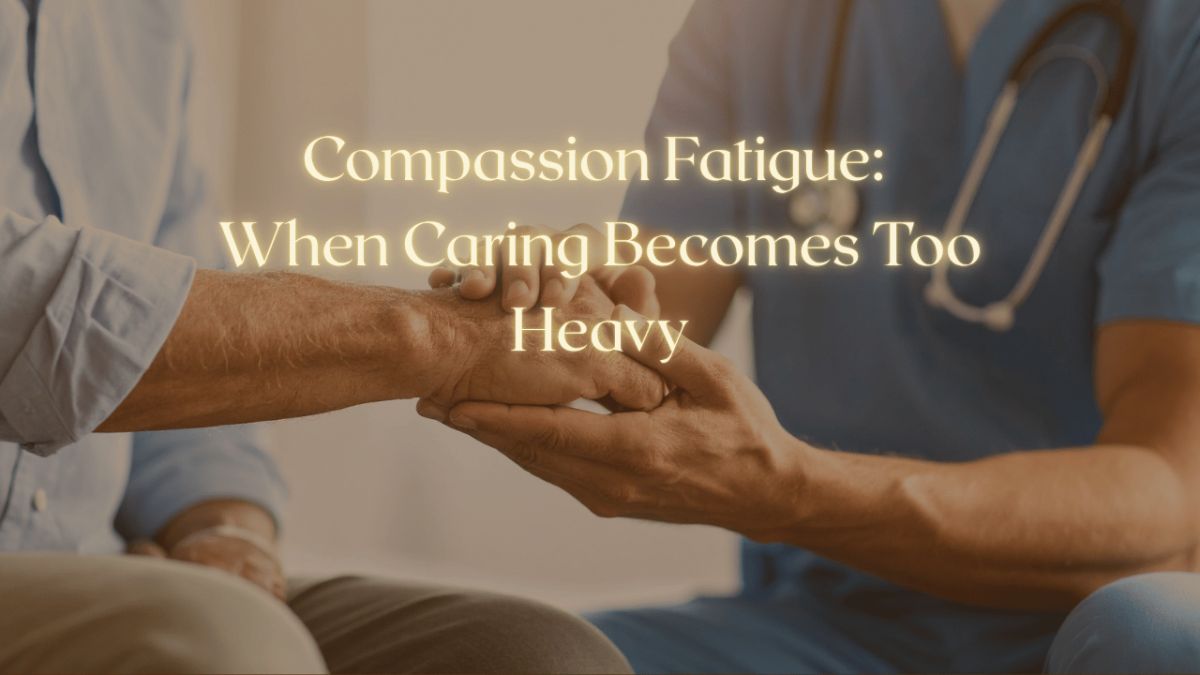
Compassion fatigue is the deep exhaustion that builds when you care for others' pain for too long without replenishing yourself. It is common among caregivers, helpers, and empaths, and it can look like numbness, dread, or a strange loss of the very compassion that used to come so naturally. If caring has started to feel heavy or hollow, you are not becoming cold. You are running on empty.
I know the shape of this from the inside. The moment someone's backstory reaches me, an illness, a hard season, any true suffering, the helper's hat is on my head before I have decided anything. My own limits vanish from the equation, and I give until the well is dry. What finally helped was not caring less. It was learning to read my own well before offering to water anyone else's garden.
What is compassion fatigue?
Compassion fatigue is the cost of absorbing others' suffering repeatedly, common in nurses, therapists, teachers, carers, and anyone who gives emotionally for a living or a lifetime. Over time, the well runs dry, and continuing to give from an empty well leaves you depleted, detached, and sometimes guilty for feeling less than you think you should.
What are the signs of compassion fatigue?
It tends to show up as:
- Exhaustion that rest does not fix, and dread before caring tasks.
- Numbness or irritability toward people you truly care for.
- Feeling less empathy than usual, and guilt about that.
- Trouble sleeping, or carrying others' stories home with you.
These are signals of depletion, not of a hardening heart.
Why are sensitive people and empaths so prone to it?
Because you feel others' pain vividly and tend to give until there is nothing left. Your empathy is strong and your boundaries often soft, so you absorb more and refill less. The same tenderness that makes you a wonderful caregiver is what leaves you vulnerable to this particular exhaustion. And if the tiredness comes with the sense of carrying feelings that were never yours to hold, empath burnout is the neighboring territory; the two often travel together.
How do you recover from compassion fatigue?
Recovery is about refilling and protecting, gently:
- Rest before you are empty, and treat recovery as part of the work, not a reward.
- Set down others' pain with a small daily ritual, so you stop carrying it home.
- Protect solitude and things that restore you, not only things that drain you.
- Let others hold some of the load, and accept help without guilt.
Learning to set suffering down is not becoming cold. It is the only way to stay compassionate for the long haul. And if part of the heaviness is that your giving has quietly become expected, this piece on how to stop being taken advantage of without losing your kindness pairs well with this one.
If the numbness, dread, or exhaustion is heavy or persistent, please be gentle with yourself and reach out to a professional you trust. This deserves real support.
Frequently asked questions
Is compassion fatigue the same as burnout?
They overlap. Compassion fatigue is specifically the exhaustion of absorbing others' suffering, often layered on top of general burnout.
Can empaths get compassion fatigue outside of a caring job?
Yes. Any empath who repeatedly holds others' pain, in friendships, family, or community, can experience it, not only professional caregivers.
How do you prevent compassion fatigue?
By building recovery into your rhythm, setting down others' pain regularly, keeping boundaries, and refilling on purpose rather than waiting to run dry.
A gentle close
You were never meant to carry everyone's pain without rest. Protecting yourself is not a failure of compassion, it is what keeps your compassion alive.
If you are learning to give without emptying yourself, The Ritualist Circle is a quiet place to be held while you refill.
Satine is the founder of The Ritualist Method, a gentle framework of breath, reflection, and daily ritual created for highly sensitive people. A yoga instructor since 2010, she brings more than fifteen years of guiding the body toward steadiness, along with her own seasons of moving through overwhelm, to help sensitive souls return to their own rhythm. She writes not as an expert above, but as a Light Keeper who found her own way home.