How to Stop Absorbing Other People's Emotions (A Gentle Guide for Sensitive People)
Jul 31, 2026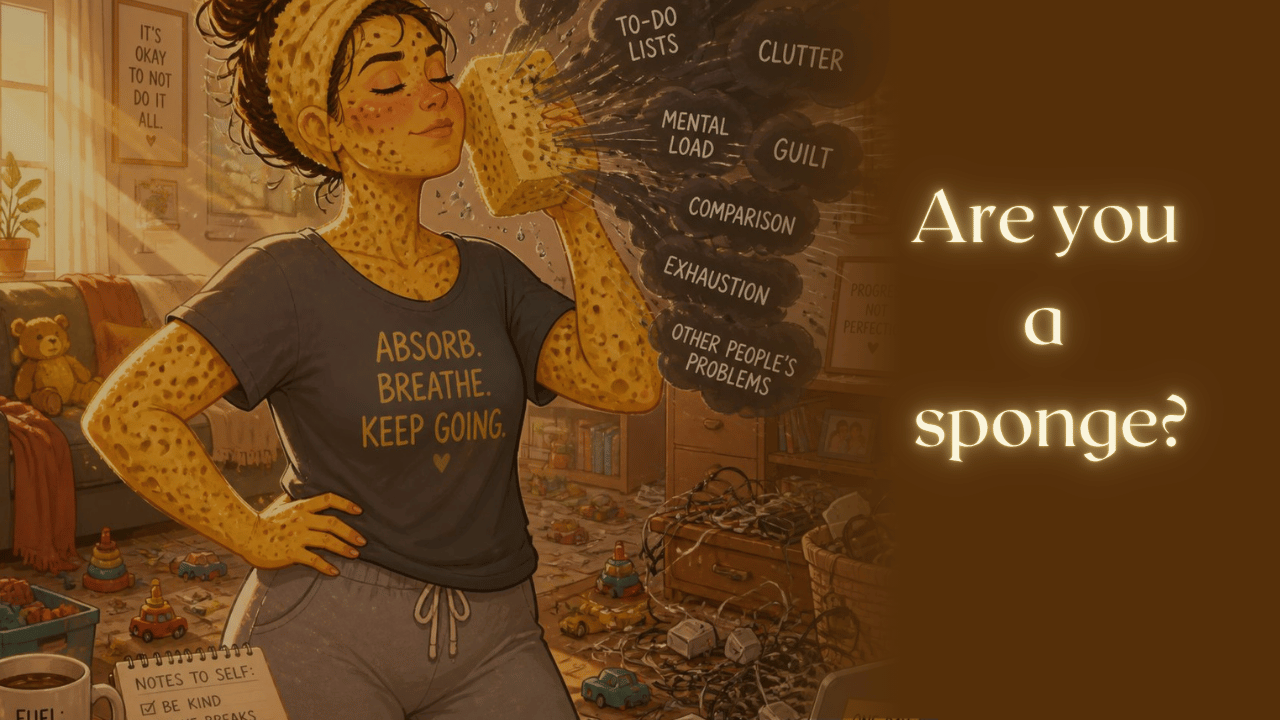
If you absorb other people's emotions, their moods, their frustrations, sometimes their whole day, you are not weak and you are not doing empathy wrong. Absorption is the shadow side of the same wiring that makes you perceptive and warm. You cannot argue it away, but you can manage it, and the key is gentler than you expect: not armor, but attention. When you notice the imprint someone else's weather leaves on your body, boundaries stop feeling selfish and start feeling like tending. And one practical truth changes everything: the more tired you are, the more the line blurs between what is yours and what is not, so protecting your energy IS protecting your borders.
This guide walks through why absorption happens, the rescue reflex that often rides along with it, and five gentle practices for caring without carrying. It is part of a series on toxicity, real and imagined, because before a sensitive person ever labels a room toxic, they have usually been soaking it up for a long time.
Table of contents
- Why do I absorb other people's emotions?
- The tiredness effect: when the line blurs
- The rescue reflex: feeling responsible for their problems
- Attention, not armor: what actually helps
- Five gentle practices for caring without carrying
- Frequently asked questions
Why do I absorb other people's emotions?
Highly sensitive people and empaths take in more of everything: sensory detail, subtext, and, most of all, other people's emotional states. The tension in a room, the sigh across the table, the anguish under a colleague's calm voice, all of it registers, and much of it stays.
This is not a character flaw or a failure of maturity. It is porousness, and it comes from the same wiring that makes you the person who notices, understands, and warms a room. The gift and the leak share one source. That is why scolding yourself has never worked: absorption is not a belief you can argue away. It is a trait you can learn to manage, and managing it begins with noticing how, and when, it happens most.
The tiredness effect: when the line blurs
Here is the most practical thing to know: the more tired you are, the more the line blurs between what is yours and what is not.
On a rested day you can sit beside someone's frustration and know it belongs to them. You can care without carrying. On a depleted day, the same frustration walks straight in and unpacks its bags: their mood becomes your afternoon, their problem your midnight, sometimes to the point of losing sleep over troubles you did not cause and cannot solve.
This means your boundaries are not a fixed setting. They are a resource that runs down with fatigue. The tired stretches, exactly when you have the least to spare, are when you absorb the most, so energy care and boundary care turn out to be the same practice. Rest is not a luxury for a porous person. It is border maintenance. If your system runs depleted often, feeling safe in your body is where the rebuilding starts.
The rescue reflex: feeling responsible for their problems
Past the passive soaking, there is often an active layer: the pull to fix what you absorb. Someone's tangle, a logistics mess that has nothing to do with you, and the old training fires: step in, smooth it, take on more than you can carry, save the day.
Many sensitive people, women especially, carry a version of the nice girl syndrome: the deep conditioning that a good person absorbs, accommodates, and rescues. Each individual rescue looks generous. The accumulation looks like someone quietly disappearing under other people's loads.
So here is a sentence to keep: the day is not saved if it cost you too much. A rescue that empties the rescuer is not a rescue. You can still choose to help, generosity is beautiful, but let it be a choice made in full view of the cost, not a reflex fired by someone else's urgency. If over-carrying is an old pattern for you, setting down what was never yours goes deeper on the load side of this.
Attention, not armor: what actually helps
The common advice is to toughen up, care less, build a wall. It rarely works, and it costs too much, because the wall keeps out the connection you actually want. The gentler and more effective move: bring your attention back to yourself.
Notice the imprint another person's weather is leaving on your body: the tight chest, the hum, the shortened breath, the sleep that will not come. Something shifts when you see the cost written in your own body. The boundary stops feeling selfish and starts feeling like tending, the way closing a window against rain is not an insult to the rain. You are not refusing to care about people. You are declining to be weather-damaged by them.
Five gentle practices for caring without carrying
1. Protect your mornings as if they were sacred
A single heavy mood over morning coffee can stay with you the rest of the day, not because anything happened to you, but because you drank it with the coffee. The first hour sets the water level for the whole day. Claim it: your pace, your quiet, your own inner weather first. Let other people's begin at hour two.
2. Run the ownership check
Before you pick something up, one honest question: is this actually mine? Not "could I help," almost anything can be helped, but is it mine, my role, my responsibility, my emergency? If not, helping remains a choice, never an obligation your body pays for.
3. Watch your tiredness like a border guard watches dusk
Fatigue is when the line goes soft. On depleted days, lower your exposure on purpose: fewer yeses, more distance from the leaking, the sacred hour held more strictly. Not because people deserve less of you, but because there is less of you, and someone has to mind what remains.
4. Name the imprint out loud
When you catch yourself carrying, say it plainly: this heaviness is theirs, and it is leaving a mark on me. Naming separates you from the absorbed feeling just enough to set it down. A short grounding practice right after helps the body release what the mind has named.
5. Return to yourself, gently, many times a day
Absorption happens when all your attention lives in other people. The antidote is a soft, repeated homecoming: a hand on your chest, one long exhale, the quiet question "and how am I?" It is not selfishness. It is the practice that keeps the carer from dissolving into the caring.
Frequently asked questions
Why do I absorb other people's moods so easily?
Deeply sensitive nervous systems register others' emotional states vividly, and the same wiring that makes you perceptive and warm also makes you porous. It is a trait to manage, not a flaw to fix, and it worsens with fatigue, which is why rest is boundary work.
How do I stop feeling responsible for other people's problems?
Run the ownership check: is this actually mine, my role, my emergency? Helping stays available as a choice, but the reflex to rescue, often trained into sensitive people early, deserves a pause. Remember: the day is not saved if it cost you too much.
Is absorbing emotions the same as empathy?
No. Empathy is understanding and caring about what someone feels. Absorption is taking the feeling home and paying for it with your sleep and your body. You can keep full empathy while learning to absorb less; they are separable, with practice.
Why is it worse when I am tired?
Boundaries are not a fixed setting but a resource that runs down with fatigue. Depletion blurs the line between what is yours and what is not, so tired days call for less exposure and stricter self-tending, exactly when guilt tries to argue otherwise.
How do I protect myself without becoming cold?
Skip the armor; use attention. Notice the imprint others' weather leaves on your body, name it, and return attention gently to yourself. Boundaries built from self-awareness read as calm, not coldness, and they usually improve your relationships rather than harming them.
What if someone's mood in the morning ruins my whole day?
Treat your first hour as sacred: your quiet, your pace, your own inner weather before anyone else's. The first hour sets the day's water level. If a mood does land on you, name it as theirs, ground your body, and let the day restart from there.
A gentle closing
Your porousness is the shadow of your perception, and neither needs to be cured. What is theirs can stay theirs. What is yours, your morning, your sleep, your one good hour, deserves a keeper, and the keeper is you. Care without carrying. Notice without absorbing. And when the choice to help is truly yours, make it from a full account, never an overdrawn one.
If you would like company while you practice, the Ritualist Circle is a small, calm room of sensitive people learning to keep themselves while caring for others.
Satine is the founder of The Ritualist Method, a gentle, sensory framework of breath, reflection, and daily ritual created for highly sensitive people. A yoga instructor since 2010, she brings more than fifteen years of guiding the body toward steadiness, along with her own seasons of moving through overwhelm, to help sensitive souls feel calmer in the body and return to their own rhythm. She writes and guides not as an expert standing above, but as a Light Keeper who found her own way home.