How to Use Music to Regulate Your Nervous System
Sep 06, 2026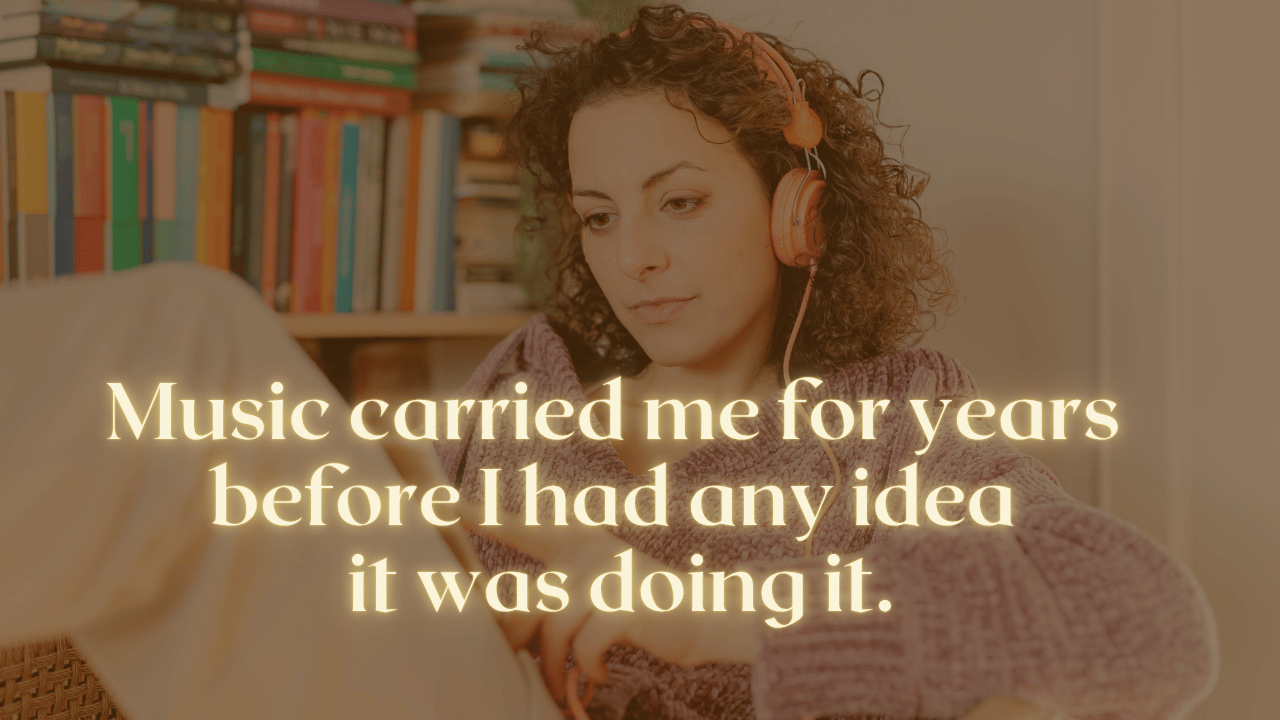
Music changes your physical state faster than almost anything else available to you, and most people never use it deliberately. It stays background: the thing underneath the driving, the cooking, the working. Used on purpose, it becomes one of the most reliable tools a sensitive nervous system has.
This is about moving music from something that happens around you to something you reach for, and how to build your own small library of what does what.
On this page
- Why does music affect the nervous system so strongly?
- Why sensitive people feel it more
- The reason you have never used it on purpose
- Building your own library: three states
- Undivided listening, and why it is different
- When music works against you
- Questions people ask
Why does music affect the nervous system so strongly?
Because it reaches the body before it reaches the argument.
You do not have to interpret music, agree with it, or understand it for it to change your breathing. Rhythm influences pace, both of movement and of breath. Slow, predictable music tends to settle; fast, driving music tends to mobilise. That happens below the level of thought, which is exactly why it works on days when nothing you say to yourself is landing.
For a nervous system that has been braced all day, that matters enormously. Reasoning with a braced body rarely works. Changing what it is hearing frequently does.
None of this is about music being medicine. It is a companion, not a clinical treatment. But as a first move on a difficult afternoon, it is faster and more reliable than most of what we usually reach for.
Why sensitive people feel it more
If you process sensory information deeply, music arrives with more of everything: more texture, more emotional information, more physical response. Sensitive people frequently describe being moved to tears by a piece of music and feeling faintly embarrassed about it.
That intensity is the whole reason it is a useful tool for you. What lands more strongly can also shift you more strongly. The same depth that makes a crowded café exhausting makes a single piece of music genuinely capable of changing your afternoon.
It also means the wrong music costs you more, which is worth knowing and rarely said.
The reason you have never used it on purpose
Here is the honest answer, and it is not laziness.
Attention goes to what breaks. That is its function. The tooth you notice is the one that aches, the stair you notice is the one that creaks. Anything working correctly is invisible, and it is invisible precisely because it is working.
Music has been holding people up quietly for their entire lives without ever once failing, so it never asks to be noticed. It becomes weather. Present, unexamined, unattributed.
Which means most people arrive at their forties having been carried through countless difficult days by something they have never thought about for ten consecutive minutes.
The shift is not gratitude. Gratitude on demand is exhausting and slightly false. The shift is simply noticing what it has been doing, and then starting to reach for it on purpose.
If your mind is loud enough that even choosing something feels like too much, the workbook Quieting the Noise is a gentle place to start. You can get the first pages here.
Building your own library: three states
You do not need a playlist for every mood. You need very few pieces, each reliably attached to one state, so that choosing takes no energy on a day when you have none.
One for energy. Something with a strong rhythm that makes you want to move, and then actually move to it. Dancing is not decoration here; the body doing something is most of the effect. This is for the flat afternoon, the task you cannot start, the heaviness that is not sadness.
One for coming down. Slow, repetitive, undemanding. A mantra, a drone, something without lyrics competing for your attention. This is for after the difficult conversation, the overstimulated evening, the mind still running at eleven at night.
Everything in between, for everything in between. The rest of your listening does not need a job. It is allowed to be pleasure, and pleasure is not a lesser reason.
The two anchored pieces are the point. Two tracks that reliably do one thing each are worth more than fifty carefully sorted playlists you never open.
And nobody can build this for you. No list of recommended calming music will find your piece, because the association is personal and often has nothing to do with the music's objective qualities. You find it the way you learn what a friend needs when they go quiet: by paying attention over a long time and then trusting what you noticed. That is not a lesser kind of knowing. It is accumulated attention, which is the most reliable kind there is.
Undivided listening, and why it is different
There is one practice worth naming separately, because almost everybody has lost it without registering that they had it.
Sit down and listen to one piece of music. Nothing else. No driving, no tidying, no scrolling, no second screen.
Most people have not done this in years. Music has become the layer underneath other activity, and in that role it works at perhaps a tenth of its strength.
Given your whole attention, even for a single track, it does something categorically different. It becomes closer to a meditation, with the advantage that it holds your attention for you rather than asking you to hold it, which many people find far easier than sitting in silence.
Four minutes. One song. Nothing else happening. If you have tried and disliked traditional meditation, start here instead; it is the same skill arriving through a friendlier door, and it pairs naturally with the one-minute practices you can use in a loud hour.
When music works against you
Honesty matters here, because this is not universally benign.
Music can deepen a mood rather than shift it. Sad music when you are already low can be exactly right, and it can also be a way of staying somewhere longer than serves you. The test is whether you feel moved through it afterwards or simply further in.
It can become avoidance. Constant sound means never sitting with your own thinking. If you cannot be in a room without something playing, that is worth noticing gently rather than judging.
It can overstimulate. For sensitive people, particularly at the end of a full day, more sensory input is sometimes the opposite of what is needed. Silence is also a tool, and if you are already at capacity, the answer to an overstimulated nervous system may be less input rather than better input.
And lyrics compete. If your mind is already loud, words to follow can add to the noise rather than settling it. This is why so many people find instrumental music better for coming down and only realise it years later.
Questions people ask
What kind of music calms the nervous system fastest?
Generally slow, repetitive and without lyrics, because there is nothing for the mind to follow or interpret. But your own associations matter more than any genre rule, and the piece that works for you may look nothing like a relaxation playlist.
Does music actually change your physical state?
It changes it before you have decided anything, which is why it works when self-talk does not. Rhythm influences pace, and pace influences breathing. That is enough to shift a braced body.
Why do sensitive people cry at music?
Because you process sensory and emotional information more deeply, so music arrives carrying more. It is not oversensitivity. It is the same depth that makes you good at reading a room, arriving through your ears.
How do I find my own calming song?
Notice rather than search. Over a few weeks, pay attention to what you reach for when you are already frayed, and what you feel like afterwards. The piece that keeps working is your piece, whatever its genre.
Should I use the same song every time?
Yes, and that is the point. Repetition builds the association, so eventually the first few seconds begin the shift before the music has done anything. A song that only works occasionally is not yet doing this job.
Is listening to sad music bad for me?
Not inherently. Sad music can be a form of company and often helps a feeling move. Ask afterwards whether you feel carried through it or held further in it, and let that be your guide rather than a rule.
What if I do not have a musical background?
None is needed. This is not about analysis or taste. It is about noticing what a piece does to your body, which requires no training whatsoever.
Can music replace meditation?
For many people it is an easier entry to the same thing, because it holds your attention rather than asking you to hold it. If sitting in silence has never worked for you, undivided listening is worth trying instead.
Why do I never listen properly any more?
Because music slid into the background and became a soundtrack to other tasks. It is a common loss and easily reversed, and one song with nothing else happening is usually enough to notice the difference.
How loud should it be?
Loud enough to feel, quiet enough not to brace against. Sensitive people frequently listen a little too loud when they want energy and a little too loud when they want calm, and the second one costs them.
What if music makes me more agitated?
Then silence is the tool for that moment, and that is information rather than failure. On a day already at sensory capacity, less input is often the answer.
Does dancing to it matter, or can I just listen?
For energy, moving matters a great deal, because the body doing something is most of the effect. For coming down, stillness usually serves better.
Start with one
You do not need a system. You need one piece of music that reliably lifts you and one that reliably settles you, found by paying attention rather than by searching.
And once this week, sit and listen to something with nothing else happening. Four minutes, undivided. It has probably been carrying you for years without ever asking to be noticed.
If you would like to know how your own system fills and drains, and therefore what you are likely to need when, the archetype quiz is a gentle mirror and takes a couple of minutes.
Satine is the founder of The Ritualist Method, a gentle, sensory framework of breath, reflection, and daily ritual created for highly sensitive people. A yoga instructor since 2010, she brings more than fifteen years of guiding the body toward steadiness, along with her own seasons of moving through overwhelm, to help sensitive souls feel calmer in the body and return to their own rhythm. She writes and guides not as an expert standing above, but as a Light Keeper who found her own way home.