Imposter Syndrome and Comparison: How to Climb Out of the Spiral
Jul 26, 2026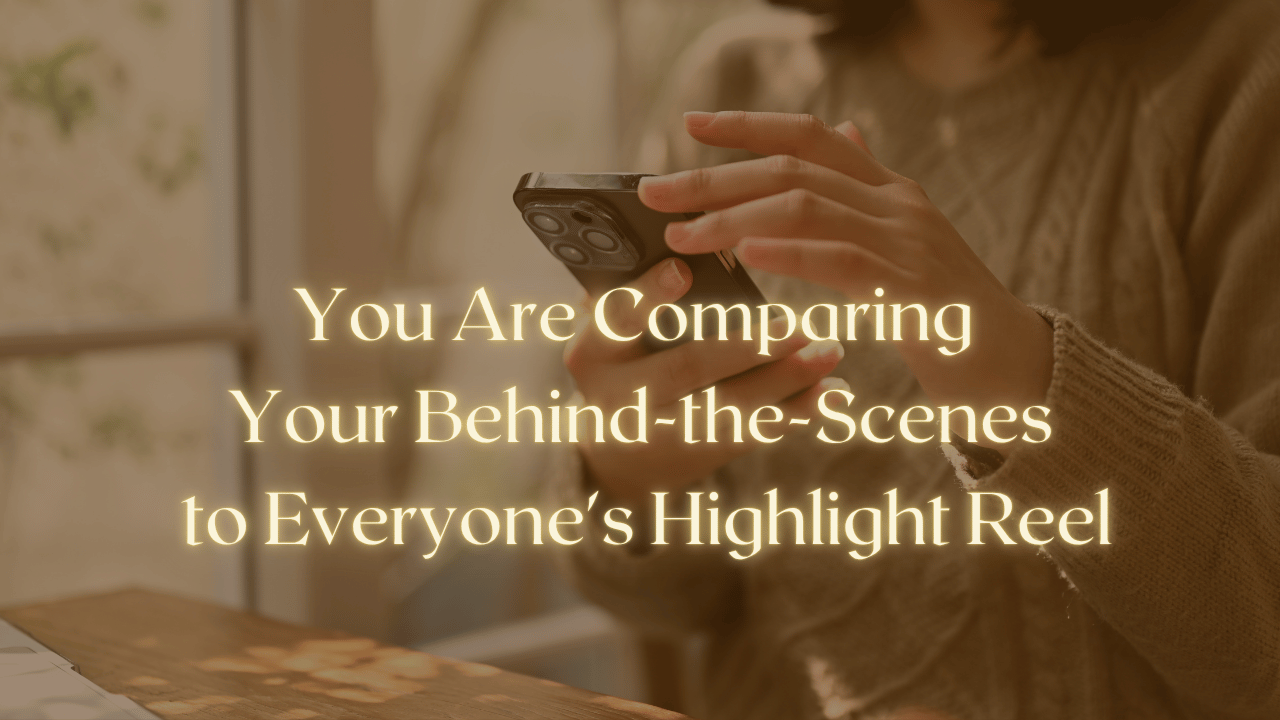
Imposter syndrome and comparison feed each other, and they get loudest in the quiet stretches when nothing is coming back to reassure you. If you keep measuring yourself against others and feeling like a fraud, the most useful thing to know is this: you are almost certainly comparing your worst day to other people's masks, your full unedited insides to their carefully chosen outsides. That is not a fair comparison, and it was never a real one.
This is a gentle guide to understanding why the spiral happens, why a little self-doubt might actually be healthy, and how to climb out when comparison pulls you under. It ends with a small ritual you can use the next time you feel yourself sliding.
Table of contents
- Why imposter feelings get louder in the quiet
- The unfair trade: your worst day against their mask
- Is it healthy to never feel like an imposter?
- Where the feelings serve you, and where they turn toxic
- A ritual for climbing out of the comparison spiral
- Frequently asked questions
Why imposter feelings get louder in the quiet
When you are busy and things are landing, there is little room for self-doubt. The results answer the question for you. But when the work goes quiet, that outside reassurance disappears, and the space it leaves does not stay empty. Doubt moves in, and it brings its favourite companion, comparison.
For highly sensitive people this is especially sharp. We tend to tie our sense of worth to visible outcomes, so when the outcomes pause, our confidence seems to pause with them. It has not actually changed. A quiet season is a season, not a verdict. But in the silence it is easy to mistake the absence of applause for proof of failure, and to start measuring yourself against everyone who seems further along.
The unfair trade: your worst day against their mask
Here is the sleight of hand nearly all of us fall for. We compare our worst day to other people's masks.
Your behind-the-scenes, the doubt, the messy drafts, the unanswered messages, the days you question the whole thing, held up against their polished, public, curated best. You are not seeing anyone's real interior. You are seeing the version built to be seen, the highlight reel. Setting your full unedited insides against everyone else's chosen outside is not a fair comparison, and it is not even a real one, because the two things are not the same category.
It is worth knowing what that mask costs the person wearing it. Holding a version of yourself in place is expensive, continuously, and the people whose outsides you are measuring yourself against are usually paying for them in a way you cannot see. That is a subject of its own, in why performing drains you and being yourself does not.
Once you can see the trade clearly, it loses some of its grip. You are not behind. You are watching everyone else's edited footage and feeling bad that your own bloopers do not match it. The trade also assumes a shared road, with one of you further along it, and that same assumption quietly powers the irritation you can feel towards someone who resembles who you used to be.
Is it healthy to never feel like an imposter?
Here is a reframe worth sitting with. The goal may not be to eliminate self-doubt entirely.
When you meet someone who has truly never questioned whether they measure up, it does not usually read as health. It reads as a kind of grandiosity, a self-image with no room left for growth or correction. A measure of self-doubt, held well, is part of what keeps a person humble, curious, and honest about the fact that they can always learn more. A little comparison, in small doses, can even show you what you admire and point at what you might grow toward. These feelings are deeply human, and most of us carry them. The presence of them is not the problem.
Where the feelings serve you, and where they turn toxic
As with almost everything, the real question is not how do I get rid of this, but where is the balance. To what end can these feelings serve you, and where do they tip into something harmful?
Held lightly, doubt keeps you learning and comparison shows you what you value. Held too tightly, they become a spiral, the kind that pulls you under and convinces you there is no point in even trying. The skill is not banishing the feelings. It is noticing which grip you are using, and loosening it before it becomes a fall.
One quick way to tell which grip you are in: ask whether the thought comes with a map. A judgment that names something specific to do differently is information you can act on. A judgment with no next step inside it is noise, and there is more on how to quiet your inner critic and sort one from the other.
If the spiral becomes constant, or starts affecting your sleep, your work, or your sense of self in a lasting way, that is worth taking seriously and talking through with a professional. Persistent, heavy self-doubt deserves real support, not just a reframe.
A ritual for climbing out of the comparison spiral
When the spiral takes hold, this short ritual helps you climb back out. It takes only a few minutes.
- Name it. Say, out loud if you can: I am in the comparison spiral. Naming it breaks the trance a little.
- Catch the unfair trade. Remind yourself that you are comparing your worst day to their mask, your insides to their outsides. Say it plainly. It is not a real comparison.
- Return to why you started. Not the numbers, not the audience, the original reason. The problem you wanted to solve. The person you wanted to help. The thing you once needed and could not find. Let it be louder than the noise for a moment.
- Name your difference as your gift. You are not the same as others doing similar work, and that is not a deficiency, it is the whole point. Your way of seeing, your voice, your story, that uniqueness is what you actually have to offer. No one can give it in quite your way.
- Take one small step. Not a grand comeback, just one honest action toward your own work, chosen from your reasons rather than in reaction to anyone else's.
If you would like a gentle mirror for your own particular wiring, rather than a measuring stick against everyone else, the archetype quiz is one soft way to remember how you are made. And steadying the body first often makes this easier, which is where feeling safe in your body comes in.
Frequently asked questions
Why do imposter syndrome and comparison happen together?
Comparison is the fuel imposter syndrome runs on. When you feel like a fraud, you look outward for evidence, and you find other people's polished highlights, which seem to confirm the fear. The two reinforce each other, especially in quiet stretches with little reassurance coming in.
How do I stop comparing myself to others?
Start by catching the unfair trade: you are comparing your full inner reality to their curated outer image. Name it, return to your own reasons for doing the work, and remember that your difference is your value, not your shortfall. Comparison loses power once you see it is not a real contest.
Is it normal to feel like an imposter even when I am doing well?
Yes, very. Imposter feelings are extremely common, especially among conscientious and sensitive people, and they often show up precisely when the outside reassurance goes quiet. Feeling this way is not evidence that you are actually a fraud.
Is never having self-doubt a good thing?
Not necessarily. A complete absence of self-doubt can signal grandiosity, a self-image with no room for growth. A measure of doubt, held lightly, keeps you humble and learning. The aim is balance, not the total elimination of the feeling.
When does comparison become toxic?
Held lightly, comparison can show you what you admire. It turns toxic when it becomes a spiral that erodes your sense of worth, paralyzes you, or convinces you there is no point in trying. If it becomes constant or affects your daily functioning, consider reaching out for professional support.
How do I remember my own worth in a crowded field?
Return to why you started, and name what makes your approach different. No one else stands exactly where you stand or offers exactly what you offer, to exactly the people you are meant to reach. In a field full of sameness, your particular difference is the gift, not the flaw.
A gentle closing
Comparison is ultimately pointless, because no one else is standing exactly where you stand, offering exactly what you offer. You are not lesser for being different. The difference was the gift the whole time. Let a little doubt keep you humble, refuse to let it become a spiral, and come back, gently, to your own reasons and your own way.
If you would like company while you practice holding these feelings gently, the Ritualist Circle is a small, steady room of sensitive people learning to trust their own way, together.
Satine is the founder of The Ritualist Method, a gentle, sensory framework of breath, reflection, and daily ritual created for highly sensitive people. A yoga instructor since 2010, she brings more than fifteen years of guiding the body toward steadiness, along with her own seasons of moving through overwhelm, to help sensitive souls feel calmer in the body and return to their own rhythm. She writes and guides not as an expert standing above, but as a Light Keeper who found her own way home.