Morning Rituals for Highly Sensitive People
Jun 23, 2026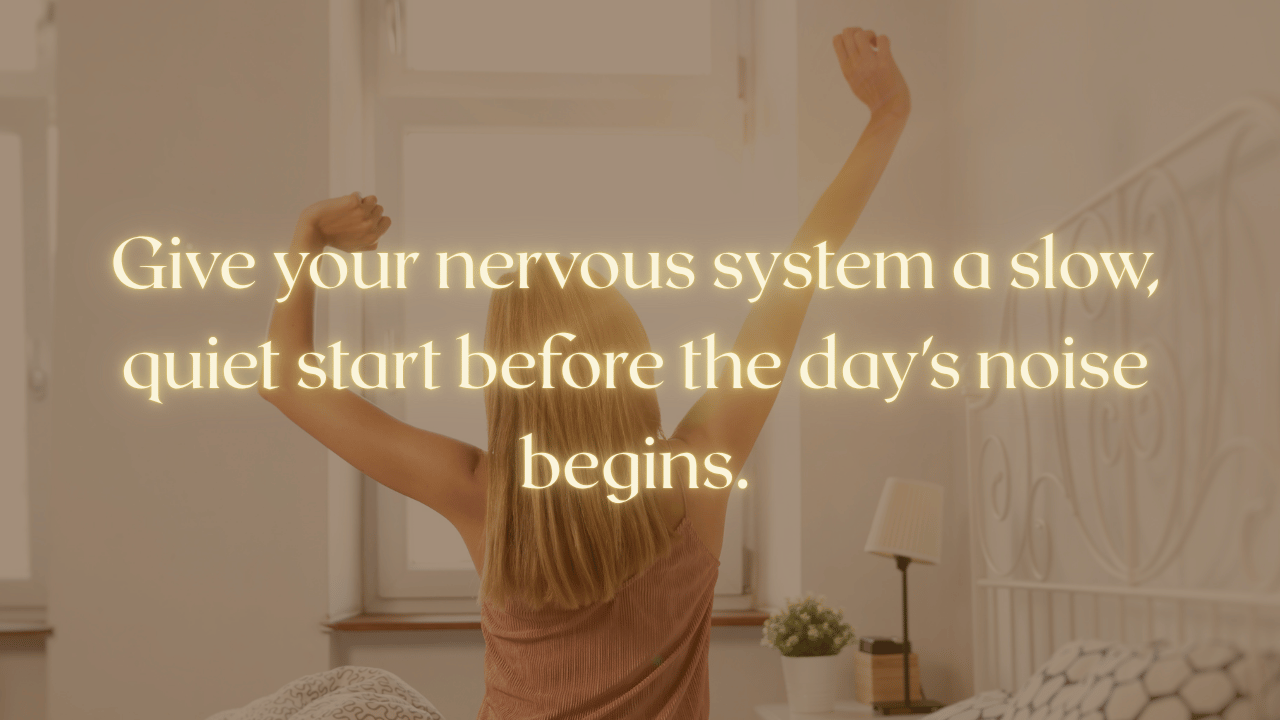
A good morning ritual for a highly sensitive person does one essential thing: it gives your nervous system a slow, quiet start before the day's noise begins. How you spend your first waking minutes often sets the emotional weather for the entire day, and sensitive people feel that influence far more than most.
If you wake already braced, reach straight for your phone, and feel behind before you have begun, you are starting the day in activation, and a sensitive system rarely recovers from that on its own. This guide explains why mornings matter so much for HSPs, what makes a morning ritual work, and how to build a gentle, screen-free start that fits your pattern.
In this guide
- Why mornings matter more for sensitive people
- Common morning mistakes that overwhelm HSPs
- A gentle morning ritual, step by step
- Morning rituals by archetype
- How to keep it small and sustainable
- Frequently asked questions
Why mornings matter more for sensitive people
A sensitive nervous system wakes up already porous, ready to absorb whatever it meets first. If the first input is a phone full of news, messages, and demands, you begin the day in a state of activation, playing catch-up rather than starting from steadiness.
A gentle morning ritual lets your system come online slowly, in a low-stimulation environment, so you meet the day from calm instead of chasing it. Because sensitive people carry the morning's tone forward more strongly, those first quiet minutes are some of the highest-leverage time in your whole day.
Common morning mistakes that overwhelm HSPs
- Reaching for the phone immediately, flooding a fresh nervous system with input before it has settled.
- Rushing, which starts the day in low-grade fight-or-flight.
- Over-ambitious routines, long, complex morning regimens that feel like one more thing to fail at.
- Caffeine before calm, stacking stimulation onto an already responsive system.
- No transition, going straight from sleep into demands with nothing in between.
You do not need to fix all of these. Removing even one, especially the phone, can change the feel of your morning.
A gentle morning ritual, step by step
This takes five to ten minutes and asks very little of you.
1. Delay the screen. Give yourself even ten minutes before reaching for your phone. This single change protects your nervous system more than any other.
2. Let your feet meet the floor slowly. Sit on the edge of the bed, feel the ground, and take three slow breaths with long exhales before standing.
3. Add warmth. Hold a warm drink in both hands and actually notice it, the heat, the scent, rather than gulping it on the move.
4. Choose one quiet anchor. A short stretch, a page of journaling, a few minutes by a window, or simply sitting in stillness. One is enough.
5. Set one gentle intention. Not a to-do list, just a word for how you want to feel today: steady, open, kind.
The aim is not productivity. It is to tell your body it is safe before the day asks anything of it.
If you would like a guided practice to anchor your morning, the Express Grounding ritual is three minutes and asks nothing but that you press play.
Morning rituals by archetype
The most steadying morning depends on your nervous-system pattern:
- Grounders thrive on rhythm, the same calm sequence each day.
- Reflectors need quiet and a little solitude, perhaps journaling.
- Movers do best with gentle movement first, a stretch or short walk.
- Connectors may want a moment of warm connection, even with a pet.
- Creators benefit from a small creative or sensory moment.
- Visionaries need grounding to land in the body before the mind races ahead.
- Restorers do well with softness and an unrushed pace.
You can take the free archetype quiz to find yours, then shape your morning to fit. For the broader practice, see what rituals are and why they work.
How to keep it small and sustainable
A morning ritual you actually do beats an elaborate one you abandon. Five quiet minutes, repeated daily, will do more for a sensitive nervous system than an hour-long routine you dread. Start with one element, usually delaying the phone, let it become natural, then add another only if you want to. And when you feel ready to shape a morning practice that is truly yours, this simple template for creating your own personal ritual walks you through it gently.
Consistency matters more than perfection. A missed morning is not a failure; simply return the next day. For the bigger picture of building gentle daily structure, see the complete guide to thriving as a highly sensitive person.
Frequently asked questions
What is a good morning ritual for a highly sensitive person?
A slow, screen-free start: delay your phone, breathe with long exhales, hold a warm drink mindfully, do one quiet anchor like stretching or journaling, and set a gentle intention. Five to ten minutes is plenty.
Why should highly sensitive people avoid their phone in the morning?
A freshly woken sensitive system absorbs whatever it meets first. A phone floods it with input and activation before it has settled, so you start the day already overwhelmed and playing catch-up.
How long should a morning ritual be?
Five to ten minutes is enough, and even one to three minutes helps. Consistency matters far more than length; a short ritual you do daily beats a long one you abandon.
What if I don't have time for a morning routine?
Start with one tiny element, like three slow breaths before standing, or ten phone-free minutes. A sensitive nervous system responds to small, consistent signals of calm, not lengthy routines.
Should I exercise in my morning ritual?
Gentle movement helps many sensitive people, especially Movers, who settle better after discharging energy. Keep it gentle rather than intense; the goal is to regulate, not to add more stimulation.
Why do I wake up feeling anxious?
Cortisol naturally rises in the morning, and a sensitive system can amplify it, especially after poor sleep or with a stressful day ahead. A calm, predictable morning ritual helps lower that early activation.
Is coffee bad for highly sensitive people in the morning?
Not necessarily, but many sensitive people are caffeine-sensitive, so stacking it onto a responsive system early can increase jitteriness. Try a calming ritual first, and notice how caffeine actually affects you.
What is the best morning ritual for anxiety?
One that is slow, predictable, and body-based: phone-free time, long exhales, warmth, and a single gentle anchor. Lowering morning activation gives anxiety less to build on through the day.
Should my morning ritual be the same every day?
For many sensitive people, especially Grounders, sameness is soothing because predictability calms the nervous system. Others prefer gentle variation. Consistency in timing usually helps more than rigid sameness in content.
How do I stick to a morning ritual?
Keep it small, attach it to something you already do (like making your first drink), and let go of perfection. Returning after a missed day is part of the practice, not a failure.
Can a morning ritual really change my whole day?
Often, yes. Because sensitive people carry the morning's tone forward, starting from calm rather than activation meaningfully shifts how the rest of the day feels. The first minutes are high-leverage.
What should highly sensitive people do right after waking?
Pause before rising: feel your feet, take a few long exhales, and resist the phone. Letting your system come online gently, rather than jolting it, sets a steadier baseline.
Does journaling help in the morning?
For many sensitive people, especially Reflectors, a few morning lines help process inner noise and set intention. Keep it brief and pressure-free; even one sentence counts.
What if mornings are chaotic with kids or work?
Anchor one tiny ritual within the chaos, three breaths with your coffee, a moment of warmth, rather than aiming for a long calm routine. Small protected moments still regulate a sensitive system.
How is a morning ritual different from a morning routine?
A routine is a checklist of tasks; a ritual is done with presence and intention. The same act, like a warm drink, becomes a ritual when you do it mindfully rather than on autopilot.
A gentle closing
Your mornings do not have to be conquered or optimized. They can simply be where you gather yourself before you begin, a few quiet minutes of safety that the rest of your sensitive, perceptive day can rest upon.
Want a morning ritual made for the way you're wired? Discover your archetype, or step into The Ritualist Circle for gentle daily rituals and the company of people who understand.
About the author
Satine is the founder of The Ritualist Method, a gentle, sensory framework of breath, reflection, and daily ritual created for highly sensitive people. A yoga instructor since 2010, she brings more than fifteen years of guiding the body toward steadiness, along with her own seasons of moving through overwhelm, to help sensitive souls feel calmer in the body and return to their own rhythm. She writes and guides not as an expert standing above, but as a Light Keeper who found her own way home.