Toxic Positivity: When Good Vibes Only Becomes a Way to Silence Yourself
Aug 02, 2026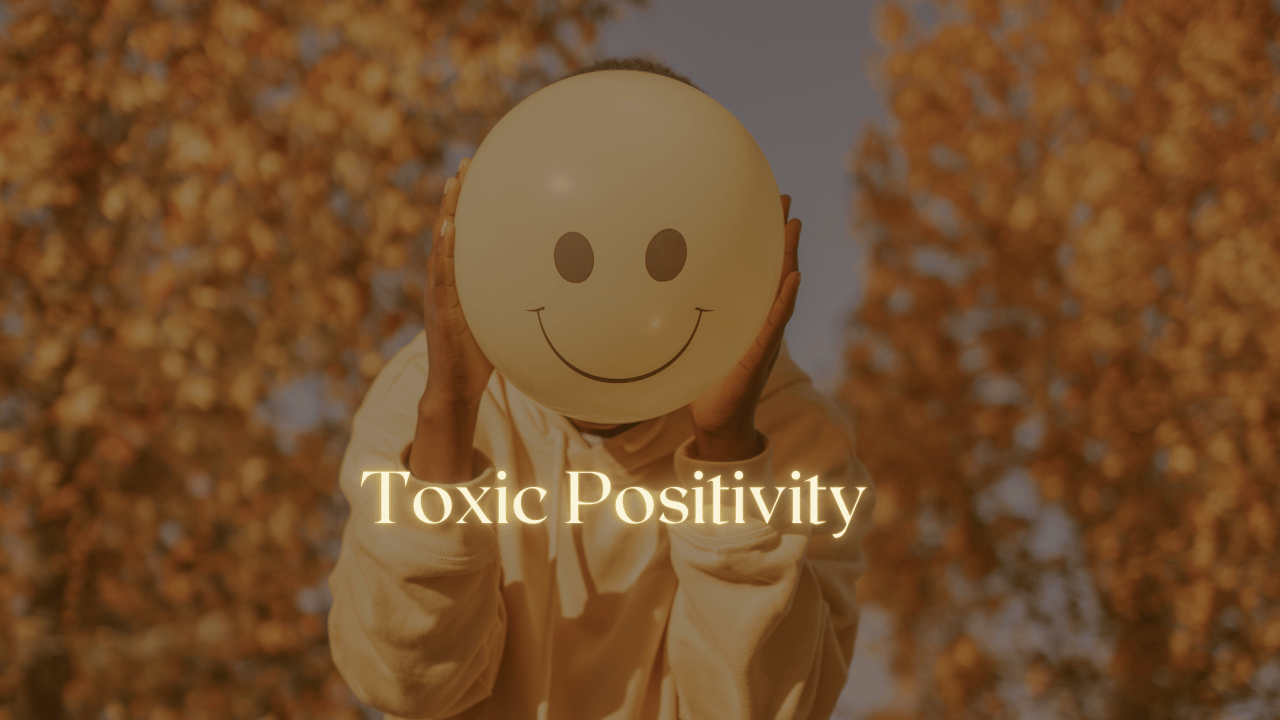
Toxic positivity is what happens when brightness is used to silence a real feeling. Someone brings a worry and receives "everything happens for a reason." Someone names an exhaustion and is handed a gratitude list. Or, in the version almost nobody talks about, you bring yourself a real feeling, and you hand yourself a slogan instead of a seat. Positivity itself is not the problem; hope is oxygen. The problem is a specific move: positive language deployed to end a feeling that needed to be felt.
This guide covers how to recognize toxic positivity, why it costs sensitive people the most, the self-directed version most of us run on autopilot, and a one-word test that separates honest hope from forced brightness. It is part of a series on toxicity, real and imagined, for people who feel everything deeply.
Table of contents
- What is toxic positivity?
- The version you do to yourself
- The closet: where refused feelings go
- Hope says and, toxic positivity says instead
- A note on wellness culture
- The practice: acknowledgment before comfort
- Frequently asked questions
What is toxic positivity?
Toxic positivity is the use of optimistic language to dismiss, minimize, or silence a real emotional signal. The words themselves are often kind: stay positive, look on the bright side, at least, it could be worse, good vibes only. What makes them toxic is not the vocabulary but the function. In the moment they are spoken, they do not solve the hard thing. They relocate it, from the conversation into the person who raised it, along with a quiet suggestion that feeling it was the real mistake.
Earlier in this series we set a test for real harm: a pattern that diminishes you, repeated, unrepaired. Constant forced positivity passes that test in a particularly sneaky way, because it disables the very mechanism repair depends on: the naming of what is wrong. A room where hard signals are answered with brightness is a room where nothing true gets fixed. If you are still sorting what deserves the word toxic at all, toxic or just uncomfortable is the first chapter of this series.
Highly sensitive people pay the highest price here, twice over. We feel our own emotions deeply, so being told to skip them is like being told not to notice weather while standing in it. And we often serve as the early-warning system of our rooms, sensing what is off before anyone else names it. An early-warning system that keeps being told to smile does not become happier. It becomes disabled.
The version you do to yourself
Here is the half of toxic positivity that rarely makes the articles, and I will go first.
I have food allergies, and I still catch myself lying about the small losses. An old favorite goes past me at a table, something my body no longer allows, and before the missing even finishes arriving, a bright inner voice is already talking over it: you do not even miss that anymore. You are fine. It sounds like resilience. It is actually a small, practiced act of self-disrespect, a way of telling a real feeling it is not welcome. And once I noticed it, I found it everywhere. The plan that fell through was fine. The no that stung did not sting. Whenever I cannot have what I want, the bright voice arrives first, mechanically, and the honest one never gets a word in.
Psychologists sometimes call this emotional suppression or self-invalidation; you might simply call it gaslighting yourself with a smile. Whatever the name, the mechanism is the same as the room-level version: a real signal, silenced by brightness, stays unprocessed. If your feelings tend to arrive at high volume in the first place, why you feel everything so deeply explains what that intensity is and is not.
The closet: where refused feelings go
Think of your feelings as items in a closet. The shiny ones go on display for company. The heavy ones, the disappointments, the small griefs, the wants that were not answered, get folded and pushed to the back, because we are staying positive, because good vibes only. And the closet accepts everything. That is the trap of it. It will hold your unfelt feelings for years without complaint.
But closets eventually need cleaning, and here is what you find when you open this one: nothing in there has aged out. Refused feelings do not expire, and they cannot be given away, because every single item wears your name. Only you can process them, and they kept perfectly, waiting. The pile you avoided in daily doses becomes the weight you meet all at once, in a hard season, in your body, in an overreaction that puzzles even you. The feelings you refuse do not leave. They wait.
Hope says and, toxic positivity says instead
None of this is an argument against optimism. Sensitive people need hope as much as anyone, maybe more. The question is how to keep hope and lose the muzzle, and the test I use is one word long.
Hope says and. Toxic positivity says instead.
"This is hard, and I believe you will find your way" is hope. It makes room for the feeling and adds something beside it. "Do not dwell on the negative" is instead. It requires the feeling to disappear before the brightness is allowed to begin. Anything that demands your real signal as its entry fee is not optimism. It is erasure with good lighting. The same test works on the inner voice: "I miss it, and I am okay" tells the truth twice. "I do not even miss it" tells it zero times.
A note on wellness culture
I work in the wellness world, and I want to say something plainly to anyone wandering its spaces: the false brightness there can shade into something darker. There are corners where doubt is rebranded as low vibration, where honest questions are treated as negativity, where a person's real signals are managed rather than heard. That pattern deserves your caution, because a space that cannot tolerate your hard feelings cannot help you heal them. I watch for this language in myself, deliberately, because it is everywhere in my industry and it is easy to board that train on autopilot. Real support, from any teacher, community, or practice, makes room for your whole weather. Anything that only allows sunshine is not a sanctuary. It is a stage.
The practice: acknowledgment before comfort
1. Let the signal speak first
When a hard feeling arrives and the bright voice rushes in, pause it. One honest sentence before any comfort: I am disappointed. I miss it. This hurts. You are not building a house for the feeling. You are simply refusing to pretend it is not at the door.
2. Then add the and
After the honest sentence, comfort is welcome and real: and I will be okay. And I have been through worse. And tomorrow is new. In this order, the positivity lands as care. In the reverse order, it lands as a door closing.
3. Answer others in the same order
When someone brings you their hard thing, acknowledge before you reframe: "That is really hard" costs one sentence, and it is what lets any hope you offer afterward be heard as hope rather than dismissal. Speaking to yourself this way takes practice too; self-compassion practices for highly sensitive people can help the kinder order become natural.
4. Take one item out of the closet at a time
If you have years of stored feelings, do not clean the whole closet in a weekend. Take out one folded thing, feel it in a small dose, and let it leave the only way feelings ever do: by being felt. Gentle skills for holding what comes up are the heart of emotional regulation for highly sensitive people.
And a caring note: if what waits in your closet feels heavy, constant, or frightening to approach, a therapist or counselor is the right company for that cleanup. Getting support with old, stored feelings is not a failure of positivity. It is what taking them seriously looks like.
Frequently asked questions
What are common examples of toxic positivity?
Phrases like good vibes only, everything happens for a reason, at least it is not worse, just stay positive, and do not be so negative, when used to end a real feeling rather than accompany it. The words are not toxic by themselves; the silencing function is.
Is toxic positivity a form of gaslighting?
They are related but not identical. Gaslighting makes you doubt your perception of reality; toxic positivity makes you doubt your right to your feelings about it. Done to yourself on repeat, forced brightness can work like a soft self-gaslighting: the signal was real, and you talked yourself out of it.
Why does toxic positivity hurt highly sensitive people more?
Because HSPs feel deeply and notice early. Being told to brighten up asks them to override both their strongest experiences and their most useful gift. Over time that teaches self-silencing, and the stored signals surface later as overwhelm, resentment, or exhaustion.
How do I respond when someone answers my feelings with forced positivity?
Calmly return the signal to the room: "I appreciate the optimism, and I still need a moment with the hard part." No apology needed. People who love you will adjust; rooms that punish you for having weather are telling you something important about the room.
Am I toxically positive with myself?
Check the small losses. If your reflex to every disappointment is instant brightness, it is fine, I did not want it anyway, I do not even miss it, the honest feeling underneath is likely going straight to storage. The two-part sentence, I miss it and I am okay, is the honest alternative.
Is it wrong to want a positive attitude?
Not at all. Hope, gratitude, and optimism are nourishing when they sit beside your real feelings rather than on top of them. The order is everything: acknowledgment first, brightness after. That is what makes the brightness true.
A gentle closing
You do not have to choose between being a positive person and being an honest one. Real hope has room for the whole of you, including the folded, unshiny feelings waiting patiently in the back. Let them speak, one at a time, in small honest sentences. Brightness that silences is not light. It is paint. Brightness that arrives after the truth has been heard, that is the kind that actually warms.
If you would like company while you practice the honest order, the Ritualist Circle is a small, calm room of sensitive people where all weather is welcome.
Satine is the founder of The Ritualist Method, a gentle, sensory framework of breath, reflection, and daily ritual created for highly sensitive people. A yoga instructor since 2010, she brings more than fifteen years of guiding the body toward steadiness, along with her own seasons of moving through overwhelm, to help sensitive souls feel calmer in the body and return to their own rhythm. She writes and guides not as an expert standing above, but as a Light Keeper who found her own way home.