The 7 Nervous System Archetypes: Which One Are You?
Jun 06, 2026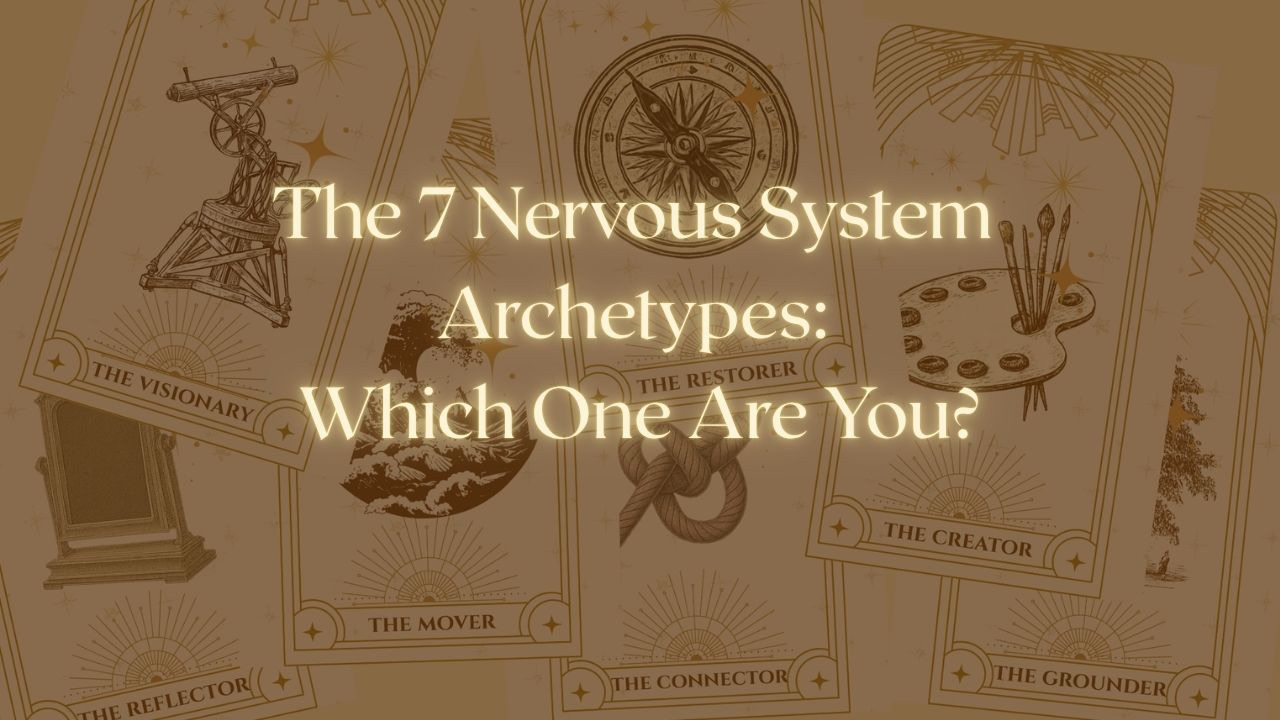
Your nervous system has a dominant pattern, a characteristic way it moves through stress, rest, and connection. These patterns fall into seven recognizable archetypes. Knowing yours is the difference between trying generic wellness advice and finally doing the thing your body has been asking for all along.
An archetype is not a fixed label, and it is not your personality type. It is how you are moving right now. You can be a Restorer in one season of life and a Grounder in another; you might be one thing at work and another in your closest relationships. Most people carry one dominant archetype plus a couple of secondary patterns that color how it shows up.
This guide explains what the archetypes are, why nervous-system patterns exist, and then walks through all seven in depth, each one's gifts, its shadow side, what depletes it, and the rituals that restore it, so you can recognize yourself and know what to do next.
In this guide
- What is a nervous system archetype?
- Why sensitive people have patterns
- The Grounder
- The Reflector
- The Connector
- The Mover
- The Creator
- The Visionary
- The Restorer
- How to find your archetype
- Frequently asked questions
What is a nervous system archetype?
A nervous system archetype is the instinctive strategy your body reaches for when it needs to feel safe, restore energy, or process overwhelm. Some people settle by going still; others must move first. Some recover in solitude; others through connection. None of these is better or worse, they are simply different operating systems.
The reason this matters so much for highly sensitive people is that a responsive nervous system gives stronger feedback when you work with its pattern, and stronger resistance when you work against it. Ask a Mover to sit in silent meditation and they may feel worse; ask a Reflector to "just get out more" and you may exhaust them. The right practice depends entirely on the pattern.
Why sensitive people have patterns
Every nervous system develops habits of regulation, ways it has learned, over a lifetime, to find safety. For sensitive people these patterns are more pronounced, because the system is more responsive and the cost of the wrong strategy is higher. An archetype is essentially your nervous system's most-practiced path home.
Knowing yours does two things. It removes self-judgment, because what looked like a flaw ("why do I need so much quiet?") is revealed as a coherent strategy. And it makes support precise: instead of generic self-care, you choose the specific rituals your pattern actually responds to. This is the heart of The Ritualist Method framework.
Curious which one is alive in you right now? You can take the free archetype quiz in about two minutes; the result tends to surprise people and then immediately make sense.
The Grounder
Essence: stability, presence, and embodied calm. The Grounder slows the world down and brings safety into a room simply by being in it.
Strength: dependable, steadying, and deeply present. Others exhale around a Grounder.
Shadow: steadiness can harden into rigidity, resistance to change, or suppressing emotion to keep the peace. Calm can quietly become numbness.
What depletes them: sudden change, chaos, being rushed, and too much unpredictability.
What restores them: rhythm and routine, sensory anchors (warmth, texture, weight), time in nature, and gentle movement to keep the calm from becoming stagnant.
Read more about the Grounder and the rituals made for this pattern.
The Reflector
Essence: depth, insight, and inner life. The Reflector feels beneath the surface and processes the world through contemplation.
Strength: wise, perceptive, and self-aware; they understand things others skim past.
Shadow: depth can become rumination, over-analysis, and withdrawal that tips into isolation.
What depletes them: noise, rushed decisions, crowded social demands, and no time to process.
What restores them: solitude, journaling, quiet, and unhurried space to let thoughts settle. Practices like gentle regulation help a Reflector return to the body when the mind runs hot.
Read more about the Reflector and the rituals made for this pattern.
The Connector
Essence: warmth, attunement, and relationship. The Connector regulates through being with and being witnessed.
Strength: empathic, nurturing, and gifted at making others feel understood.
Shadow: absorbing everyone else's emotions, losing track of their own needs, and over-giving until empty.
What depletes them: conflict, isolation, and one-sided relationships where they give far more than they receive.
What restores them: safe connection, being received as well as giving, and clear boundaries that protect their energy.
Read more about the Connector and the rituals made for this pattern.
The Mover
Essence: motion and release. The Mover processes stress through the body and must discharge energy before they can soften.
Strength: energetic, expressive, and able to shift their state through action.
Shadow: restlessness, difficulty sitting still, and using busyness to avoid feeling.
What depletes them: being forced into stillness, long sedentary stretches, and bottling energy with no outlet.
What restores them: walking, stretching, dance, and any gentle movement first, then stillness. This is why traditional seated meditation often fails Movers, as explored in why meditation apps don't work for sensitive people.
Read more about the Mover and the rituals made for this pattern.
The Creator
Essence: expression and meaning. The Creator turns feeling into form and experiences the world through imagination and beauty.
Strength: imaginative, expressive, and able to make meaning out of difficulty.
Shadow: overstimulation, emotional intensity, and creative blocks when depleted or self-critical.
What depletes them: too much input, comparison, rigid environments, and no outlet for expression.
What restores them: unpressured creative time, beauty, and sensory rituals; pairing expression with grounding so the intensity has a container.
Read more about the Creator and the rituals made for this pattern.
The Visionary
Essence: vision and intuition. The Visionary sees patterns and possibilities beyond the present moment.
Strength: insightful, future-oriented, and able to imagine what could be.
Shadow: living in the future, becoming ungrounded, anxious, or disconnected from the body and the now.
What depletes them: tedious detail, feeling trapped in the present, and overwhelm from too many possibilities.
What restores them: grounding practices that bring them back into the body, breath, and the present, plus space for their ideas to breathe.
Read more about the Visionary and the rituals made for this pattern.
The Restorer
Essence: tending and renewal. The Restorer cares for themselves and others and is attuned to what needs healing.
Strength: nurturing, gentle, and deeply restorative to be around.
Shadow: giving past their limit, neglecting their own needs, and slipping into depletion or burnout.
What depletes them: over-responsibility, caregiving without rest, and ignoring their own warning signs.
What restores them: deep rest before empty, gentle self-care, and permission to receive. If a Restorer is already depleted, burnout recovery is a gentle starting point.
Read more about the Restorer and the rituals made for this pattern.
Whatever your pattern, you do not have to navigate it alone. The Ritualist Circle is a quiet community of sensitive people, with rituals shaped for every archetype, for $12 a month.
How to find your archetype
You may already recognize yourself in one or two of the descriptions above. To know for certain, and to learn your secondary patterns, the quiz is the clearest path.
The free archetype quiz takes about two minutes. For more nuance, the in-depth assessment maps your dominant archetype plus your two strongest sub-archetypes, because no one is just one thing. Once you know your pattern, you can explore the rituals made for it.
If you would rather read your way in, each archetype has a home of its own: the Grounder, the Reflector, the Connector, the Mover, the Creator, the Visionary, and the Restorer.
Frequently asked questions
What are the seven nervous system archetypes?
They are the Grounder, Reflector, Connector, Mover, Creator, Visionary, and Restorer, seven patterns describing how a sensitive nervous system instinctively handles stress, rest, and connection.
What is a nervous system archetype?
It is your body's most-practiced strategy for finding safety and restoring energy. Some settle through stillness, others through movement, solitude, or connection. Your archetype names that dominant strategy.
Can I be more than one archetype?
Yes. Most people have one dominant archetype plus one or two secondary ones. The in-depth assessment maps your main pattern and your two strongest sub-archetypes for a fuller picture.
Can my archetype change over time?
Yes. An archetype reflects how you are moving now, not a fixed identity. Major life changes, a new baby, a loss, a move, can shift which pattern is most active.
How do I find out my archetype?
Take the free two-minute archetype quiz. It reads your current pattern and points you to the rituals that fit. The in-depth assessment adds your sub-archetypes for more nuance.
Why does knowing my archetype matter?
Because the right practice depends on your pattern. A Mover needs movement before stillness; a Reflector needs solitude; a Connector needs safe relationship. Knowing yours makes support precise instead of generic.
Which archetype is the most sensitive?
None is more or less sensitive; they simply express sensitivity differently. Each has equal depth, equal gifts, and its own characteristic shadow and needs.
What is the difference between an archetype and a personality type?
Personality types tend to be treated as fixed traits. An archetype is more fluid, a description of your nervous system's current regulation pattern, which can shift across seasons of life.
I see myself in several archetypes. Is that normal?
Completely. Overlap is expected, which is why the framework distinguishes a dominant archetype from secondary ones. The assessment helps you see how they combine.
What rituals are best for my archetype?
It depends on your pattern, Grounders thrive on rhythm, Movers on motion, Reflectors on solitude, and so on. Once you know your archetype, you can explore the rituals designed specifically for it.
A gentle closing
Whatever pattern is alive in you right now, it is not a flaw to fix. It is your nervous system's honest way of seeking safety, and once you understand it, you can finally give it what it has been asking for.
Ready to meet yourself more clearly? Discover your archetype in two minutes, then step into The Ritualist Circle to practice the rituals made for your pattern, alongside others who feel the way you do.
About the author
Satine is the founder of The Ritualist Method, a gentle, sensory framework of breath, reflection, and daily ritual created for highly sensitive people. A yoga instructor since 2010, she brings more than fifteen years of guiding the body toward steadiness, along with her own seasons of moving through overwhelm, to help sensitive souls feel calmer in the body and return to their own rhythm. She writes and guides not as an expert standing above, but as a Light Keeper who found her own way home.